
In the world of fashion events, a runway show is often seen as spectacle. Lights. Music. Models. Movement. But when fashion enters the space of fundraising, the role of a show changes. It has to go further than aesthetics. It has to communicate. It has to connect. It has to move people.
This is the space I’ve always been drawn to. The place where runway, theatre, and storytelling intersect.
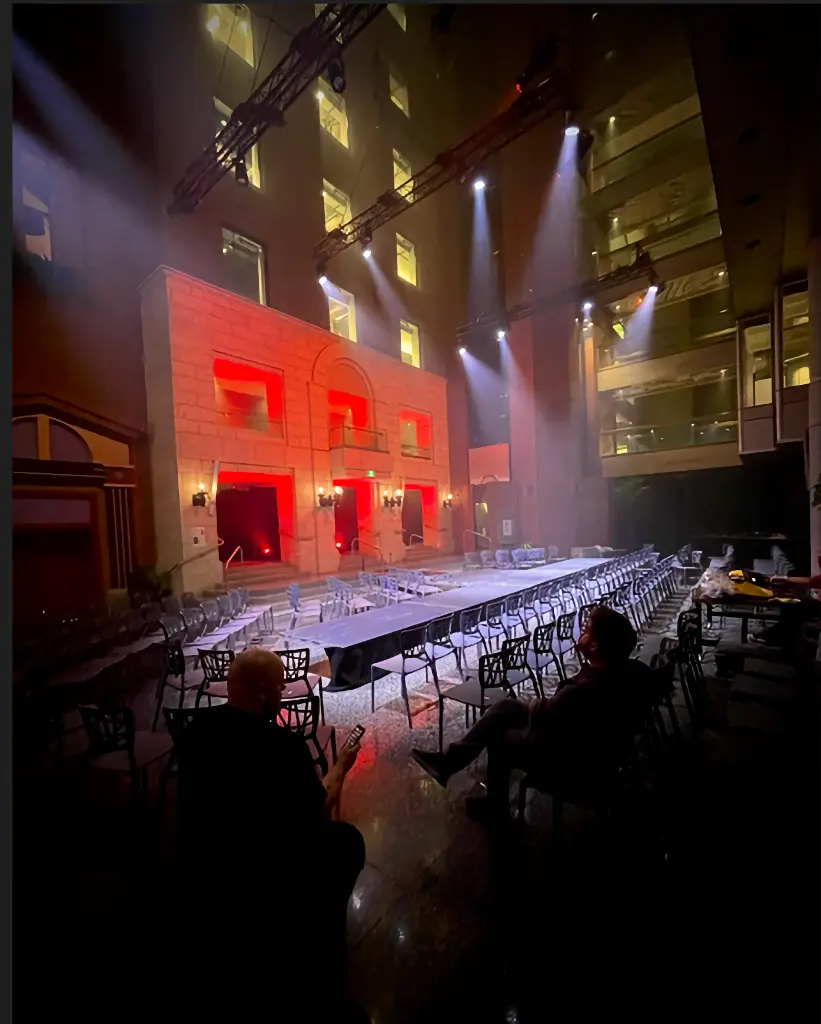
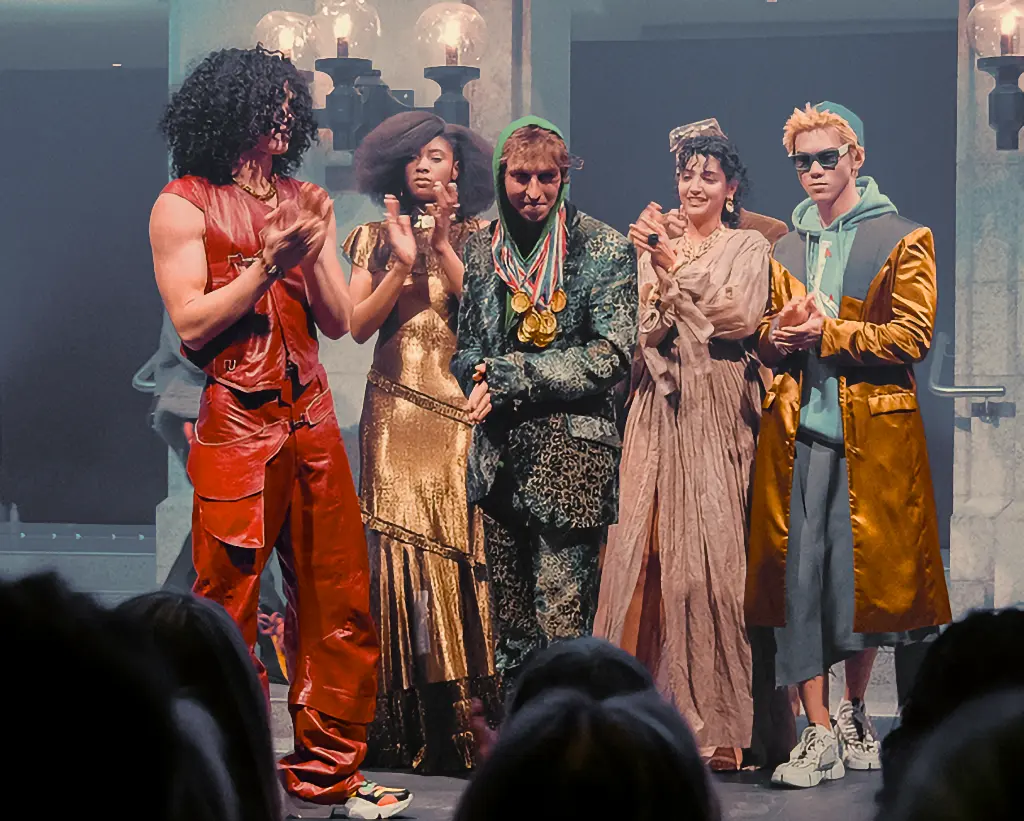
My 2025 production of Paradis Urbain, a fundraiser-driven fashion show held at Montreal’s Maison Alcan, was a clear expression of that approach. It was built not only as a visual experience, but as a narrative one. A show designed to make people feel something, and to understand why they were there.
Fundraisers have to stand apart. Theme is crucial. Production is crucial. You have to touch people emotionally and make them understand why they’re contributing.
When a Fashion Show Becomes Fashion Theatre
From the beginning, Paradis Urbain was conceived as fashion theatre rather than a traditional runway show. Instead of a continuous flow of models, the production was structured in three acts, each anchored to a central theme: courage, creativity, and couture.
Each act carried its own pace, mood, and emotional intention. The runway itself was more intimate, reinforcing the theatrical approach and inviting the audience to engage with the experience rather than just observe it. Movement was slower. Direction was more precise. Messaging was central.
When a show slows down, people feel it. It creates space for emotion, for story, for connection.
Casting as a Narrative Choice
One of the most powerful elements of Paradis Urbain was its casting. Alongside professional models, my team and I held an open casting that welcomed members of the public, including individuals living with mental health challenges who are clients of UP House, a community centre in Montréal.
For the courage act, casting was everything. We wanted real people on that runway. People who would genuinely feel what they were doing.
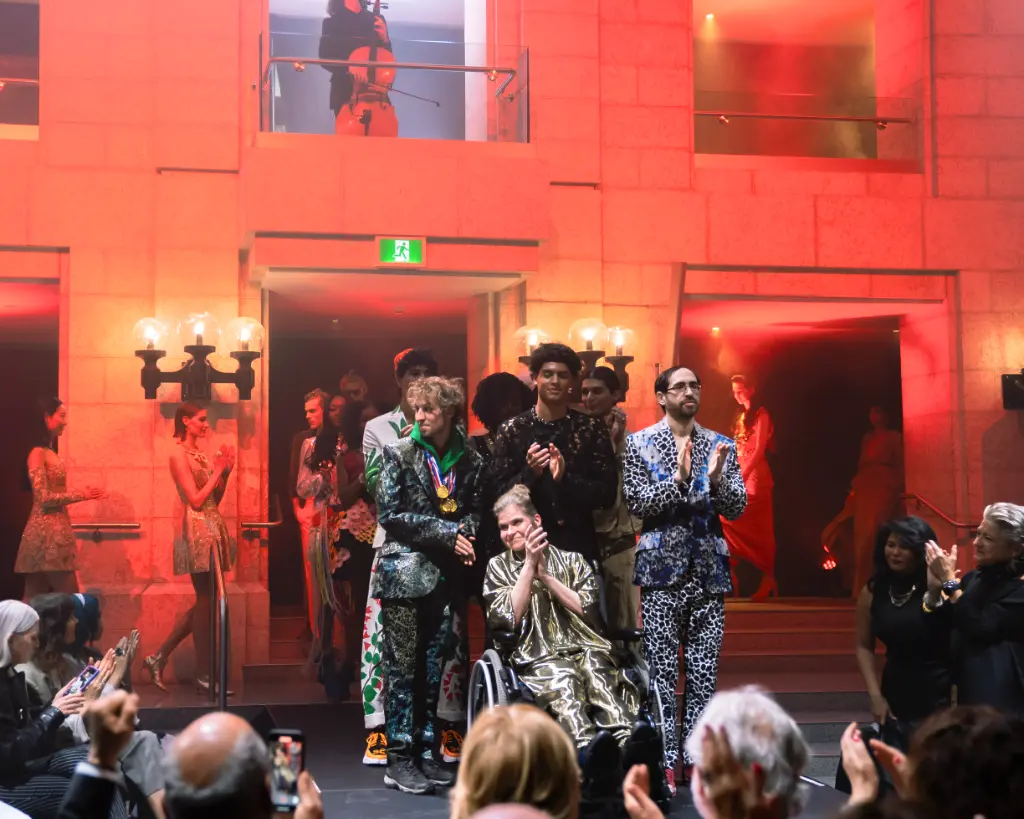
The show’s closing moment centred on an extremely shy person from the UP House community. As the final model, he received medals from the other participants onstage, a visual metaphor inspired by the cowardly lion in The Wizard of Oz. A quiet figure, visibly reserved, standing at the centre of a celebration of courage.
He was incredibly shy. But through conversation and trust, he agreed to do it. And when he walked, you could feel the room change. He was surrounded by love, and it came naturally.
Direction, Energy, and the Psychology of the Runway
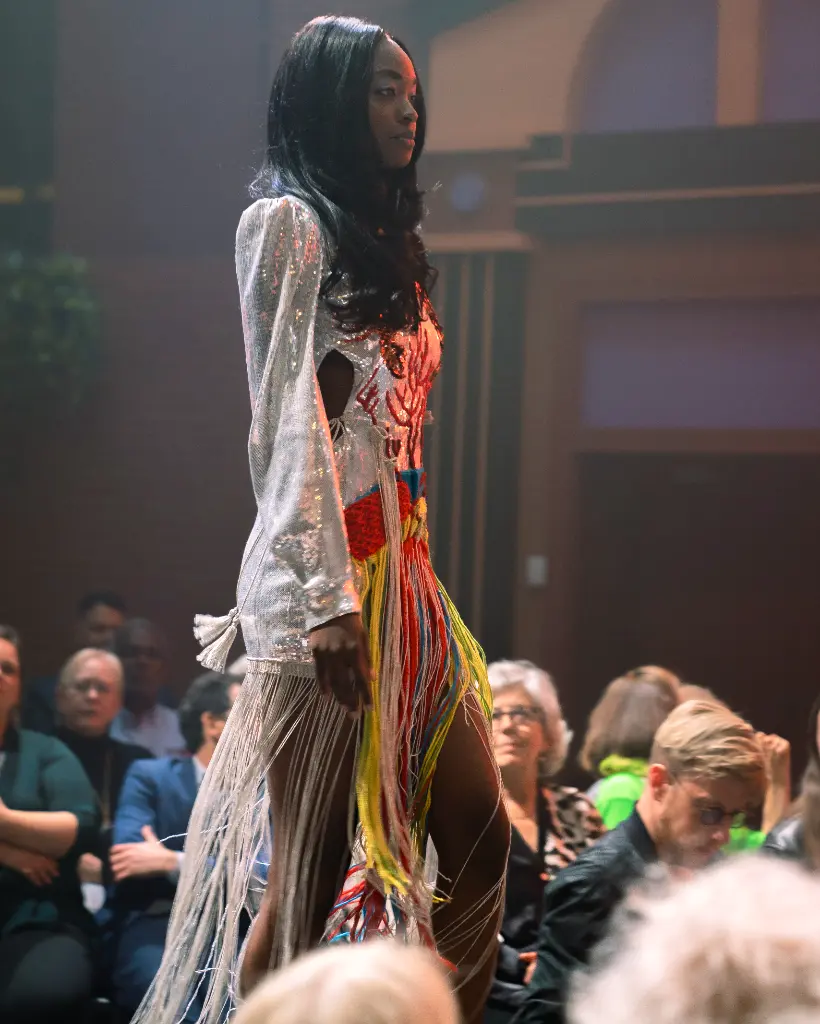
At the core of my production philosophy is direction. I don’t believe in neutral walks or generic runway pacing. Every model is a character. Every entrance has intention.
A runway show is live theatre. It’s not just walking. It’s energy. It’s eyes. It’s attitude. It’s timing.
And even on show day, the work never stops.
There is always a last word before a model walks. Faster. Slower. Give me more. Feel it. Wake up. That last cue changes everything.
Having been a model myself, I understand what happens backstage. Models need confidence. They need to feel supported. And that energy translates directly to what the audience receives.
Producing Emotion With Technical Precision
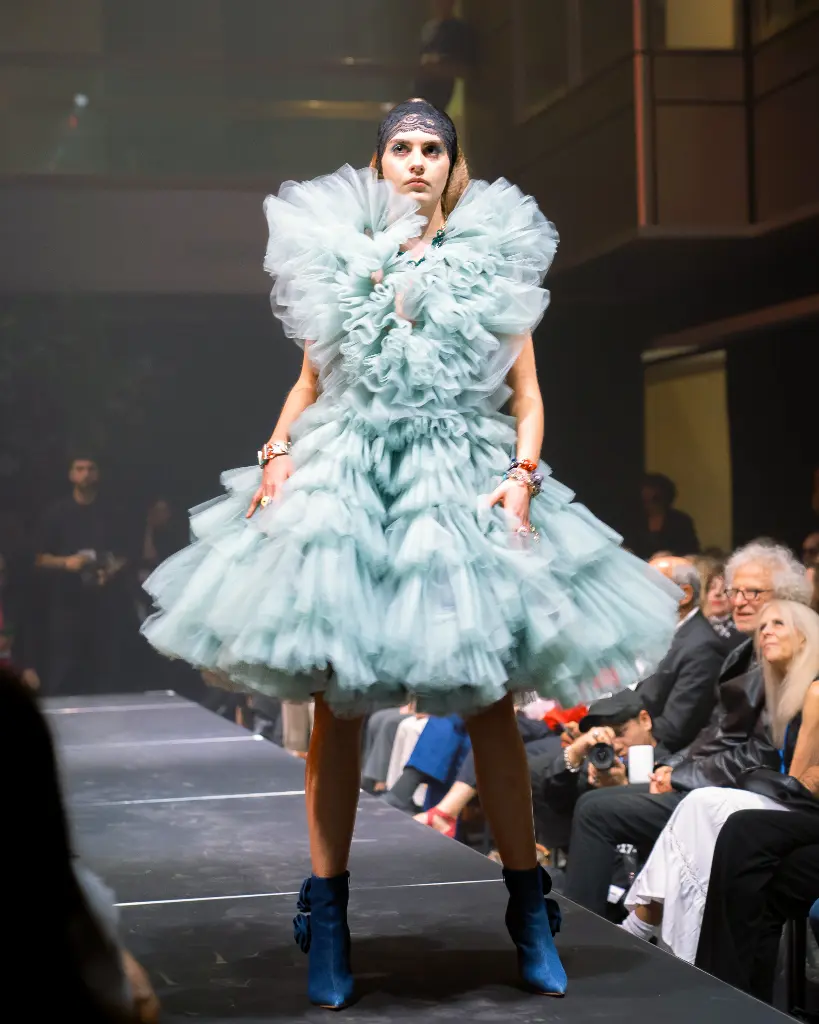
I write the scripts. I build the cue structure. Everyone involved needs to know what story we are telling.
Production meetings, mood boards, and concept development begin long before casting. Visual references are defined early. Emotional tone is mapped. Practical execution is planned alongside creative ambition.
You need to know not only what you want to create, but how you’re physically going to make it happen.
For fundraiser events, this orchestration becomes even more important. Rather than lengthy speeches, I often advocate for short, emotionally driven introduction videos that communicate the cause clearly and cinematically.
When the show starts, the audience should already know why they are there. Then the fashion becomes the extension of that message.
Through productions like this, I continue to approach fashion not only as an aesthetic industry, but as a communicative one. One capable of telling human stories, creating emotional resonance, and transforming a runway into a space where meaning, not just clothing, takes centre stage.
Creative Producer, Artistic Director, Casting Director: Hans Koechling
Back of House Production: Christina Louiso
Audio Engineer Event Direction: Christian Pronovost
Lighting Design: Erick Dionne
Models: Up House, Up Beat Casting, Montage
Hair team under the direction of: Stephane Scotto Di Cesare
Makeup under the direction of: Alexandre Deslauriers
Fashion Styling: Tinashe Musara
Clothing and accessories designers: Anne-Marie Chagnon, Biddel, Collège LaSalle, Couture to the Max, Helmer, Hip And Bone, Maison Marie Saint Pierre, Mikael D, Oscar Mendoza, Raphaël Viens, Widi’z